

The largest youth development program in the nation has a new home. On April 30, Texas A&M AgriLife Extension Service opened the first-ever permanent Texas 4-H Headquarters at Texas A&M-RELLIS, marking a historic milestone for an initiative that touches all 254 Texas counties.

The headquarters will serve as a statewide hub supporting county-based 4-H programs, volunteers, Extension professionals, and youth leadership opportunities across Texas. 4-H programming is delivered through local Extension offices, local volunteers, and county partnerships.
Renovations were made to an existing structure to create the 26,000-square-foot hub, designed to support both long-standing programs and emerging program areas from Science, Technology, Engineering, and Mathematics (STEM) to leadership development and workforce readiness.
Since 1908, Texas 4-H has grown from the original 25 “Corn Club” members in Jack County to some 520,000 Texas youngsters ages 8-18.
“This is a great day for Texas 4-H, but it’s also a great day for Texas,” stated Texas A&M System Chancellor Glenn Hegar at the ribbon-cutting ceremony. “This new headquarters will strengthen the most powerful and proven youth development pipeline in the nation, one that prepares young people for post-secondary education and entrepreneurship, meaningful careers, and purposeful lives.

AgriLife Extension Director Rick Avery, Ph.D., said the new headquarters represents a strategic investment supporting AgriLife Extension’s commitment to the future of Texas 4-H and the next generation of leaders.
“Texas is home to the largest 4-H program in America, and this facility will serve as more than just a headquarters,” Avery announced. “This headquarters enhances our ability to provide opportunities that make lasting impacts in the lives of Texas youth.”

“My involvement in 4-H is the single most impactful experience of my life, and I owe all my achievements to the foundation that was established during my youth as a 4-H member.” Peter J. McGuill, Ph.D., Director, V.G. Young Institute of County Government, Texas A&M AgriLife Extension Service
Speaking From Experience
While the new headquarters is a literal home for 4-H, the organization has been a figurative home for hundreds of thousands of students, offering a place of belonging designed to inspire multi-faceted growth, as evidenced by the following commitment:
I Pledge
My Head to clearer thinking,
My Heart to greater loyalty,
My Hands to larger service,
My Health to better living,
For my club, my community, my country, and my world.
Guadalupe County Judge Kyle Kutscher is well familiar with the 4-H Pledge. As a former 4-H member, the father of two current 4-H participants, and a county leader whose budget supports 4-H, Kutscher can speak to the program’s value on multiple levels.


A young Kyle Kutscher joined Guadalupe County 4-H in the third grade at 8 years old, and the program quickly became a central part of his childhood. Kyle’s primary focus was showing lambs, competing in both local chapter shows and the county youth show.
“What began as a personal interest soon became a family commitment,” Kutscher recalled. “My entire family was involved, and in those early years, we also relied heavily on the encouragement and guidance of our 4-H community.”

During the 1992-93 season, the Kutschers joined the Texas Club Lamb Association and participated in more than 30 shows across the state. That year, Kyle earned the overall points title and received a buckle in the Junior Fine Wool Cross Division.
“Through these experiences, 4-H provided me with far more than livestock knowledge,” Kutscher shared. “It offered a strong educational and supportive foundation that shaped my work ethic, deepened my sense of responsibility, and encouraged long-term engagement in my community.”
The family 4-H tradition has continued to this day with both of the Kutscher children actively participating. Kolt, 13, and Kallie, 10, are currently showing animals. Their commitment extends beyond exhibiting with both serving as historians for the chapter, contributing to the recordkeeping and the preservation of the club’s history. One of the yearly highlights for the Kutscher family is the County Youth Show, announced by the senior Kutscher.
“This event is particularly special to me,” he said, “as it brings together our family’s involvement, celebrates the achievements of young exhibitors, and maintains our connection to the 4-H community.”
A Judge’s Perspective
Kutscher’s 4-H experience, first as a student, then as a parent, has a third vantage point: that of a county official. Kutscher served as County Commissioner from 2011-14 and has served as County Judge ever since.
Guadalupe County demonstrates a strong commitment to Extension through consistent operational funding, multiple supported positions, and investment in equipment and facilities, Kutscher detailed. A major milestone in that commitment was the 2014 full renovation of the two-story, 10,000-square-foot AgriLife Extension facility in downtown Seguin.
“This long-anticipated project was widely supported and remains a point of pride for the entire community,” he observed. “The renovated facility has significantly enhanced opportunities for 4-H programming and youth development.”
With dedicated meeting rooms and flexible gathering spaces, 4-H clubs in Guadalupe County can host regular meetings, workshops, and project groups in a central, well-equipped location. The availability of larger multipurpose areas allows for countywide events such as achievement programs, officer training, project clinics, and leadership retreats, all under one roof.
Over the past five years, participation in Guadalupe County has remained strong with an average of 600 individual members annually and more than 15 4-H clubs throughout the county. In addition, around 400 adult volunteers contribute their time and expertise to support projects, programs, club activities, and transportation.
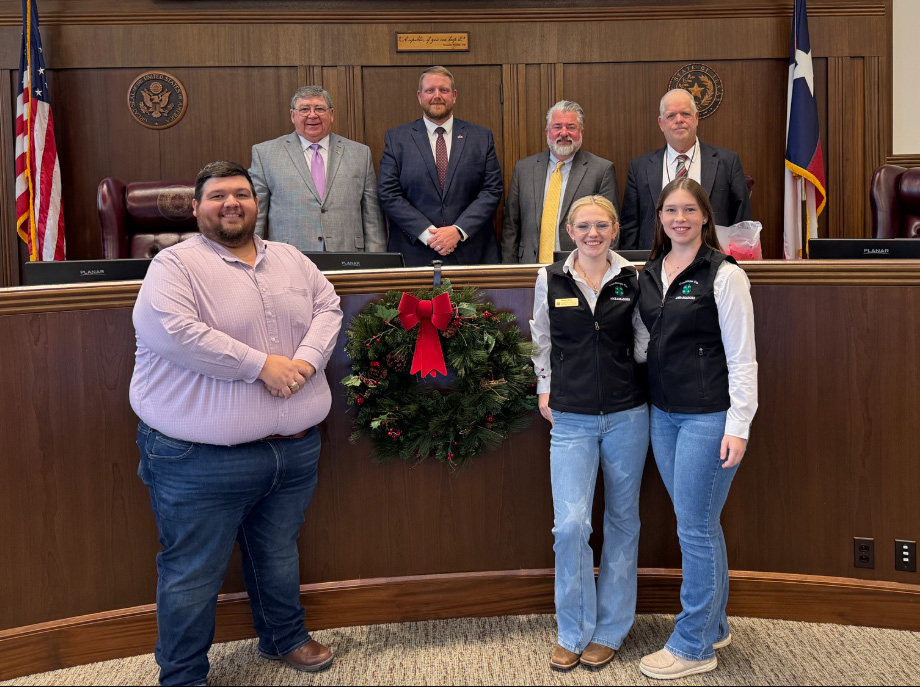
School enrichment programs continue to grow with 5,940 participants reached in the 2025-26 year, Guadalupe County’s highest engagement to date. The top five project areas include Shooting Sports, Leadership, Rabbits, Food & Nutrition, and Photography.
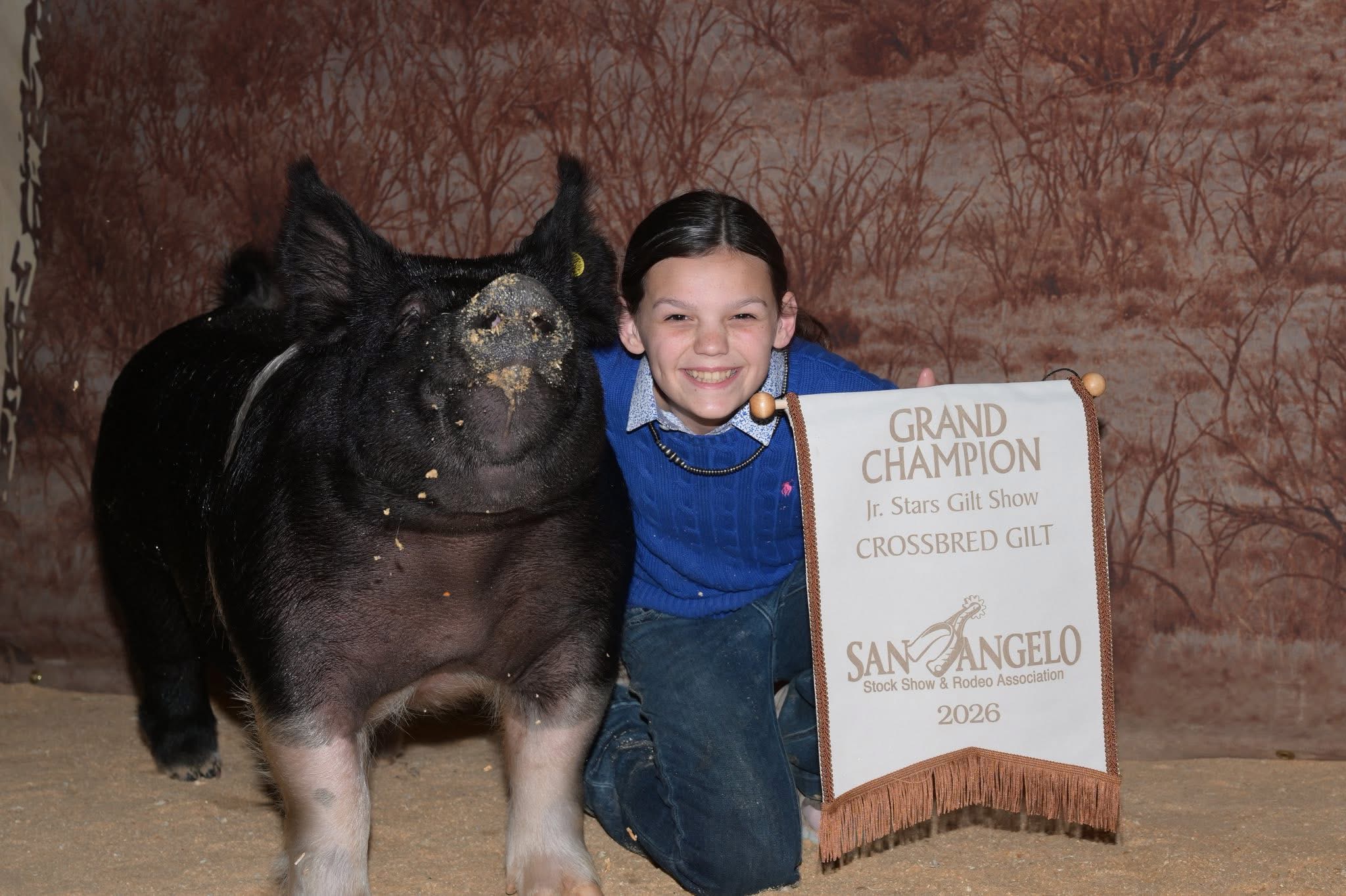
A large number of area students participate in major stock shows, and over the past five years, several teams have advanced to compete at the national level in various contests. Over the last 10 years, Guadalupe County has hosted the annual County Sumo Bot Contest for over 30 teams.
“This exciting robot competition pushes the boundaries of innovation and design for area students,” Kutscher observed. “Guadalupe County 4-H programs continue to demonstrate strong growth and impact, reflecting the dedication of our youth, families, and volunteers. We have seen increases in participation, enrichment programs, and competitive success at the state and national levels,” Kutscher summarized. “As a former member, dad, and county official, I enjoy giving our youth the recognition they deserve. They dedicate themselves to learning, commit to the 4-H program mission, and build trust and develop life skills through these experiences.”
Our Future is in Good Hands!
Tom Green County Commissioner Rick Bacon was on the interview team that led to the hiring of Hayley Meyer as 4-H coordinator. Now eight years into the position, Meyer said without the backing of the Commissioners Court, Tom Green County 4-H would not be the success that it is today.
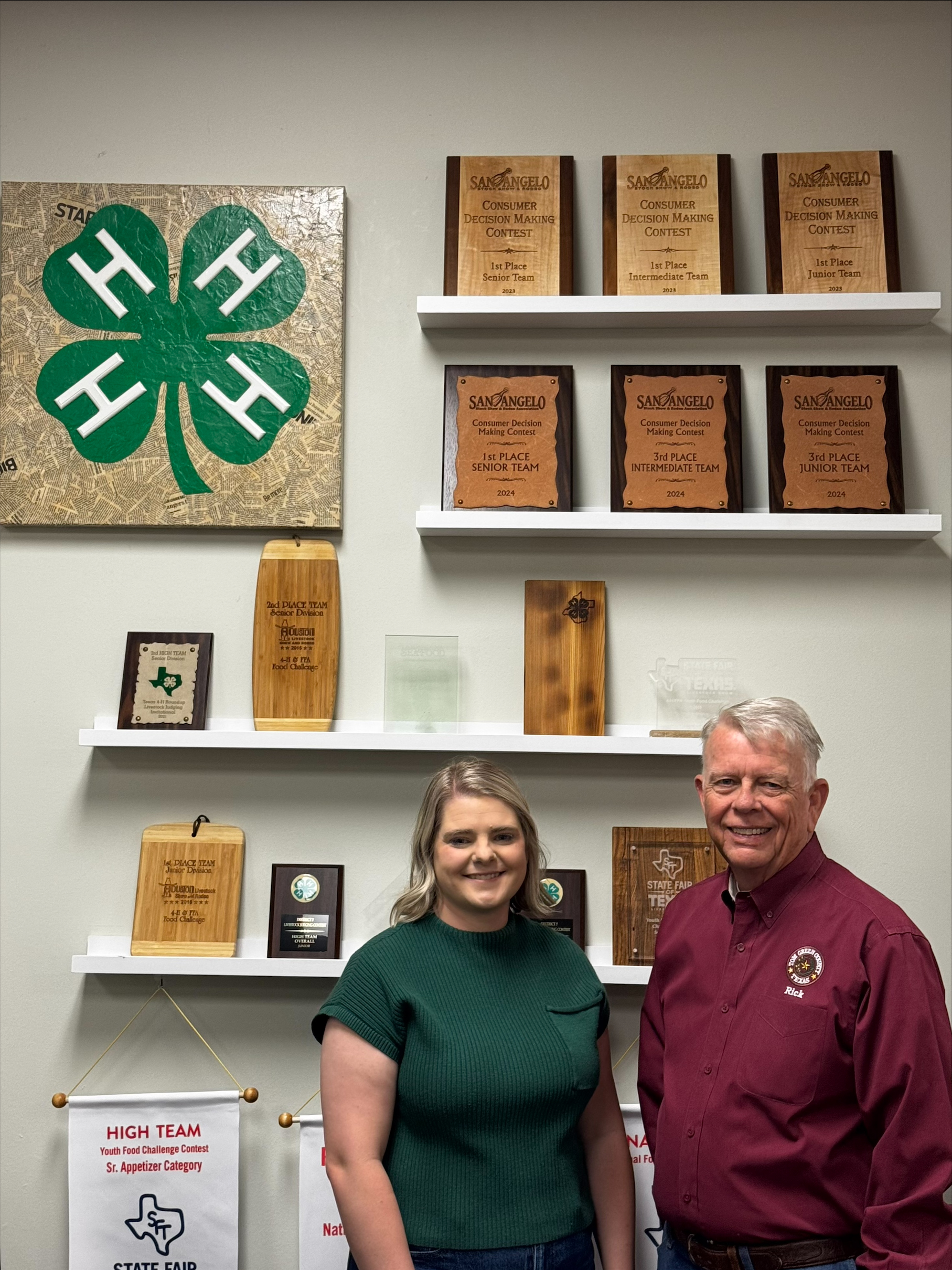
“Here in Tom Green County, we have great support from our Commissioners Court,” Meyer shared. “They always love to hear all of the things!” Several times a year, agents attend Commissioners Court and share program details, and 4-H students join in on other occasions.
“Without the support of our Commissioners Court, our program on the 4-H side and the agriculture side would not be possible,” Meyer reiterated.
As far as Bacon is concerned, support of AgriLife and 4-H is more than worth the investment. In fact, Bacon likes to quote a former Tom Green County Judge who said money spent on 4-H is “the best bang for the buck.”
“We have, I think, the best AgriLife Extension office in the state,” bragged Bacon. “Tom Green County sees the 4-H program as a valued asset that prepares our future leaders.”
Counties support AgriLife Extension through a variety of locally determined funding and partnership models that reflect their own community’s priorities. Tom Green County’s backing includes provision of facilities, a vehicle, and travel expenses. Bacon was responsible for the county obtaining a portable classroom from a local school district and donating it to the Shooting Sports Range. The county also assisted with building berms so a rifle range could be added to the existing shotgun range.
Bacon, who did not have a personal history with 4-H before joining Commissioners Court in 2013, has taken his involvement beyond the “business” side and invested personal time in the clubs serving as a competition judge, for example. Bacon has also read through resumes and attended 4-H Club “Lunch & Learns,” where youngsters demonstrate how to prepare nutritious meals.
“Our 4-H group here has knocked the socks off of scholarship competition,” Bacon added. “As a Commissioners Court, we look at our 4-H programs and these students and tell ourselves, ‘We don’t have to worry about our future!’ We are in good hands!”
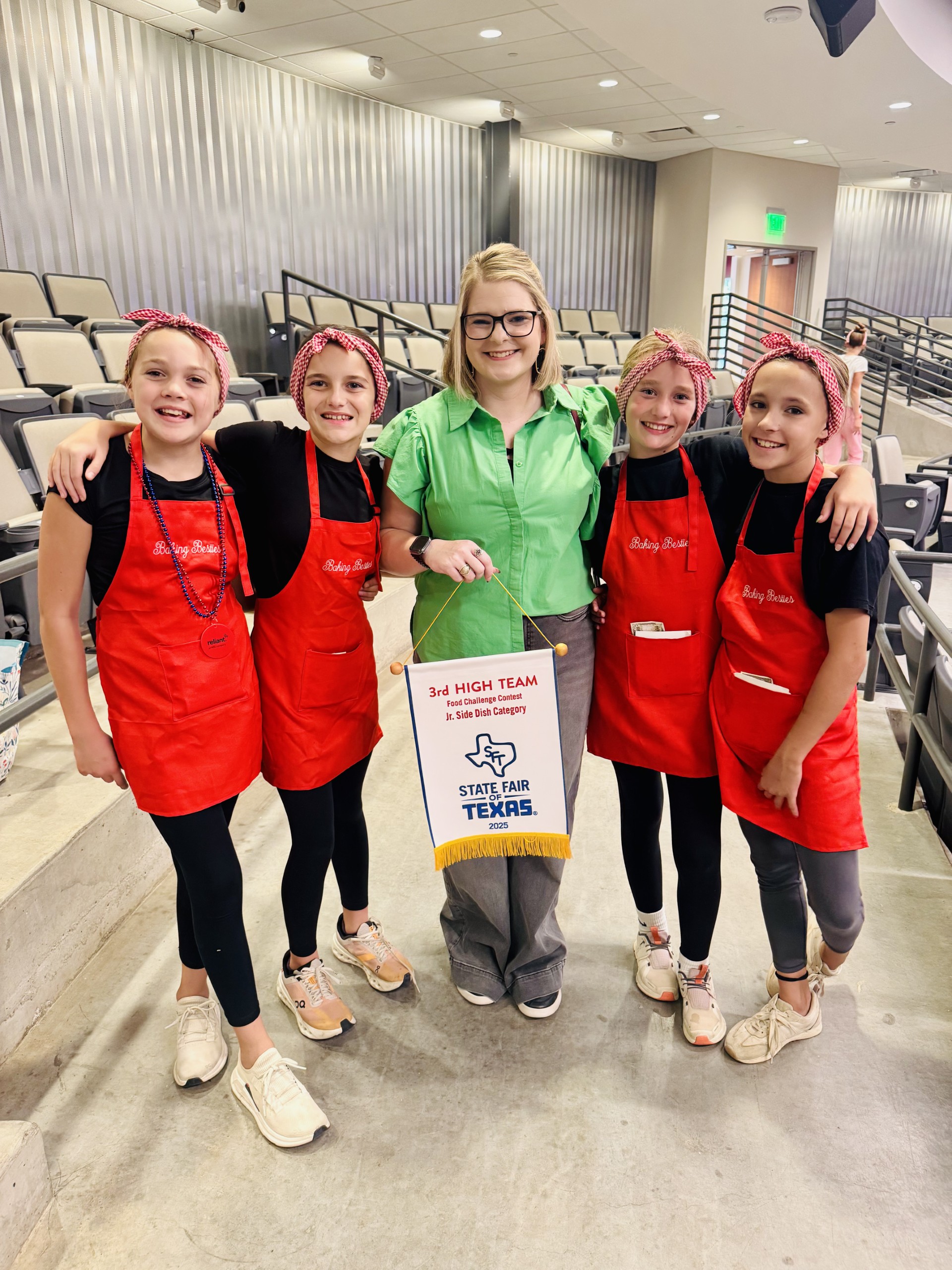
The following is a general overview of some of the youth programming offered in Tom Green County, Meyer listed:
- Project Groups: Rifle, Archery, Shotgun, and Horse.
- Kids, Kows & More: Annual Agricultural Education program for third-graders; this year, nearly 750 students and teachers were reached.
- Egg to Chick: A classroom Hatching Program where students observe the life cycle of a chicken firsthand.
- Junior Master Gardener: A Gardening Program offered to third-graders at Goliad Elementary, as well as Pre-K.
- Enrollment Numbers: 375 club members, 75 adult volunteers, and 24 clover kids.
“We offer many additional programs throughout the year focused on areas like Food & Nutrition, Consumer Education, Community Service, Leadership, Scholarship Preparation, and more,” Meyer added. “We provide the opportunity for young people to figure out what their passions are. We are building the leaders of tomorrow.”