

Hurricane Harvey: From Heartbreak To Healing
On Aug. 23, 2017, hundreds of county officials gathered in Austin for a legislative conference. That same day, Gov. Greg Abbott pre-emptively declared a State of Disaster in 30 Texas counties “in anticipation of Tropical Depression Harvey making landfall in the Gulf Coast region.”
Two days later, Harvey had morphed into a daunting hurricane, and Abbott “urged all Texans to heed the warnings of local officials, strongly consider all voluntary evacuation orders, and strictly comply with all mandatory evacuation orders.”
County Judges and County Commissioners in affected areas began making their way home from the conference to prepare and issue those evacuation orders. For officials in dozens of counties, that last night’s sleep in Austin would have to sustain them for days.
Hurricane Harvey made its initial impact near Rockport, Texas, in Aransas County with sustained winds of 130 miles per hour. Over the next several days, the storm stalled over Southeast Texas, dumping more than 50 inches of rain in some areas based on seven-day rainfall totals ending Aug. 31. Hurricane Harvey directly or indirectly took the lives of 88 Texans, according to the Texas Department of State Health Services.
The Aransas County Courthouse, built in 1956, sustained severe roof damage from Harvey’s destructive winds compounded by extensive asbestos issues that rendered it unsalvageable. The courthouse was condemned and eventually demolished in February 2018.

Groundbreaking for the new courthouse took place in 2022. Funding sources for the total cost of roughly $26 million included FEMA and tax notes.
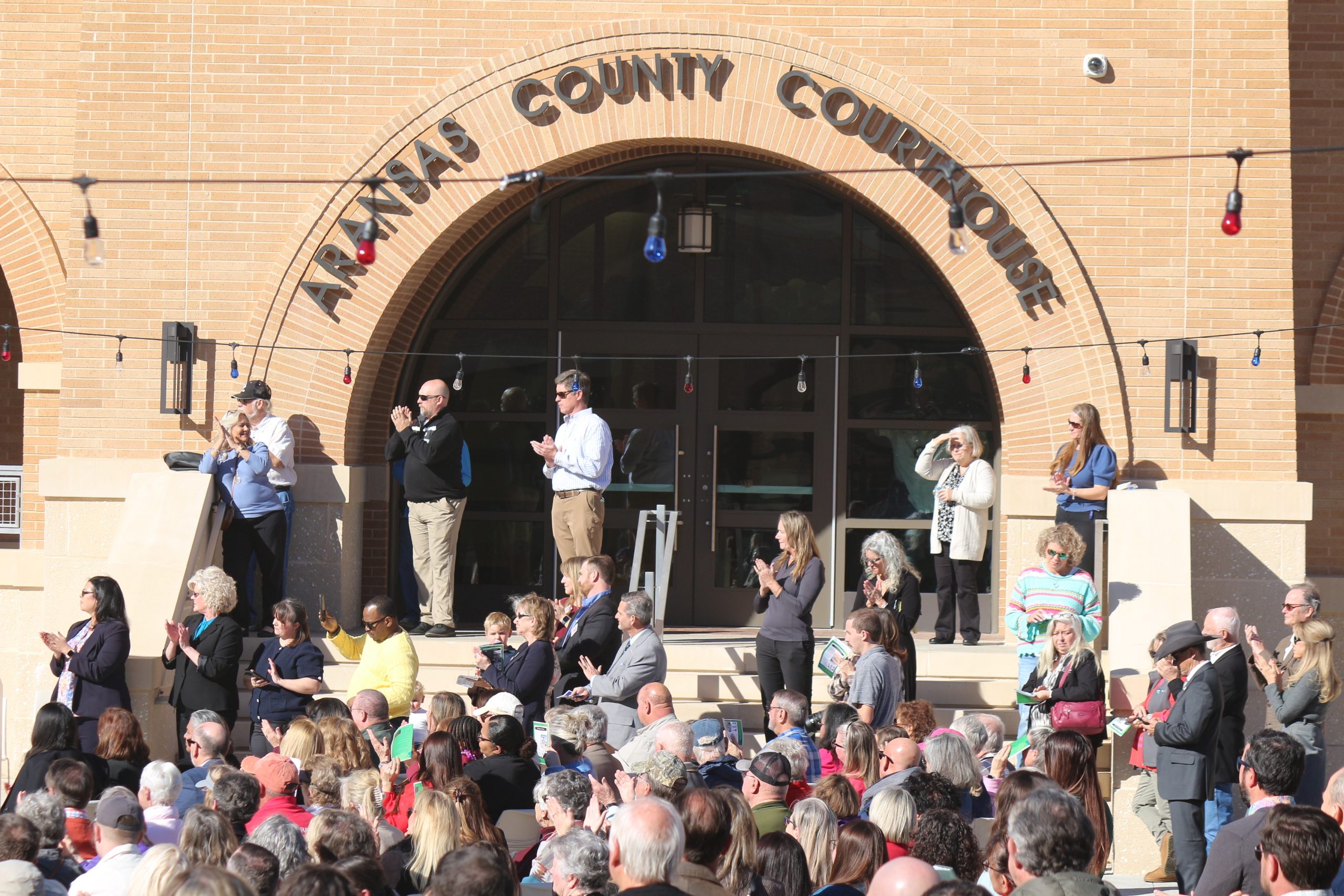
The community gathered on Jan. 28 for a ribbon-cutting ceremony marking the long-awaited completion of the new county capitol.
“We’re putting the past behind us and moving forward,” declared Aransas County Judge Ray Garza. “This is just the next chapter in the story of Aransas County.”