


Last year, County Progress asked a group of county officials to share why they ran for office. Their responses reflect a desire to serve, a fondness for their constituents (a.k.a. friends and neighbors), and a commitment to quality of life.
“I was raised in a household that believes in the motto of Service Above Self, and I wanted to give back and make Chambers County the best county in Texas,” said Chambers County Commissioner Ryan Dagley.
Burnet County Commissioner Damon Beierle had been volunteering for local organizations for nearly 20 years before he decided to run for office.
“Serving the community is a strong passion of mine,” Beierle said. “I realized I could use my passion combined with my skills, knowledge, and work ethic to lead our growing county into the future.”
San Saba County Judge Jody Fauley viewed public service as “the opportunity to give back to a community that has been a blessing to me and my family and hopefully be a part of building a positive future for our county.”



The New Year brings with it the opportunity to remember not only the “why” of public service, expressed by the officials above, but also the chance to map out the “how,” to set professional resolutions and build a plan of action.
County Progress would like to thank those of you who shared your New Year’s mindset and helped us develop the following set of “New Year’s County Resolutions.”
Fulfill My Mandated Duties
As a part of the State of Texas, the structures and duties of county government are set forth in the Texas Constitution. As an arm of the state, Texas counties can only do those actions that are specifically authorized by Texas law. Equally important, Texas counties must do those actions that are required by law.
As a unit of state government, county government responsibilities include:
- Conduct elections.
- Process and maintain voter registration.
- Provide for public safety.
- Maintain and operate the court and jail system including provision for indigent legal defense.
- Provide medical care for indigent county citizens.
- Facilitate the issuance and recording of public documents.
- Process motor vehicle registration and title transfers.
- Collect and remit state motor vehicle taxes.
- Provide local support for state agencies such as the Texas Department of State Health Services, the Department of Public Safety, the Texas Parks & Wildlife Department, and the Alcoholic Beverage Commission.
During yearly conference presentation on the roles and responsibilities of the Commissioners Court, veteran officials continue to highlight the complex nature of the job. Longtime Bell County Commissioner Tim Brown, now retired, explained it like this:
- Commissioners Courts do not live in a democracy. Rather, county government is actually an agency of the state, and everything Commissioners Courts do is rooted in state law.
- A college professor could attempt to teach a college class on the applicable body of law and not completely cover it. In addition, these laws pertaining to the Commissioners Court’s authority can be redundant and confusing.
- The Commissioners Court is the governing body of a county, similar to the chief executive officer of a corporation, addressing fiscal policy, compliance, and enforcement, a “complicated group of responsibilities.”
As part of his training course, Brown provided attendees with a compilation of statutes summarizing the general responsibilities and statutory authorizations for each function of the Commissioners Court. The document cited hundreds of statutes authorized by the following:
- Agriculture Code
- Civil Practice and Remedies Code
- Code of Criminal Procedure
- Education Code
- Election Code
- Government Code
- Health and Safety Code
- Human Resources Code
- Labor Code
- Local Government Code
- Natural Resources Code
- Occupations Code
- Parks and Wildlife Code
- Property Code
- Tax Code
- Texas Constitution
- Texas Family Code
- Transportation Code
- Utilities Code
- Vernon’s Revised Civil Statutes
- Water Code
The Texas Legislature meets every other year and makes hundreds of changes to many of these statutes, meaning officials need to keep apprised of evolving laws. Thankfully, the County Judges and Commissioners Association of Texas (CJCAT) has an established legislative program to help keep Commissioners Court members informed.
Set Discretionary Goals
As a unit of local government, the Commissioners Courts of Texas are often described as “grassroots government,” and County Judges and Commissioners are oft portrayed as “those closest to the people” who live and work where “the rubber meets the road.”
In his presentation titled County Expenditures and Services, former Denton County Auditor James Wells wrote, “Texas counties have long operated under the idea that their primary purpose is to provide services to the citizens. All actions of county government and all expenditures of county funds are connected to the goal of providing these services.” In the majority of Texas counties this means going beyond the mandatory services and expanding into “discretionary” services, such as parks, community centers, libraries, senior centers, and emergency medical and family services – those special functions that enhance the quality of individual lives and the community as a whole.
Texas county roads are a common topic of discussion when it comes to county services. The Texas Constitution and statutes assign roads as a county responsibility, confirmed CJCAT Senior General Counsel Jim Allison. However, the funding level is discretionary with the Commissioners Court.
What goals and priorities will you set for your county?









Conduct Effective Meetings
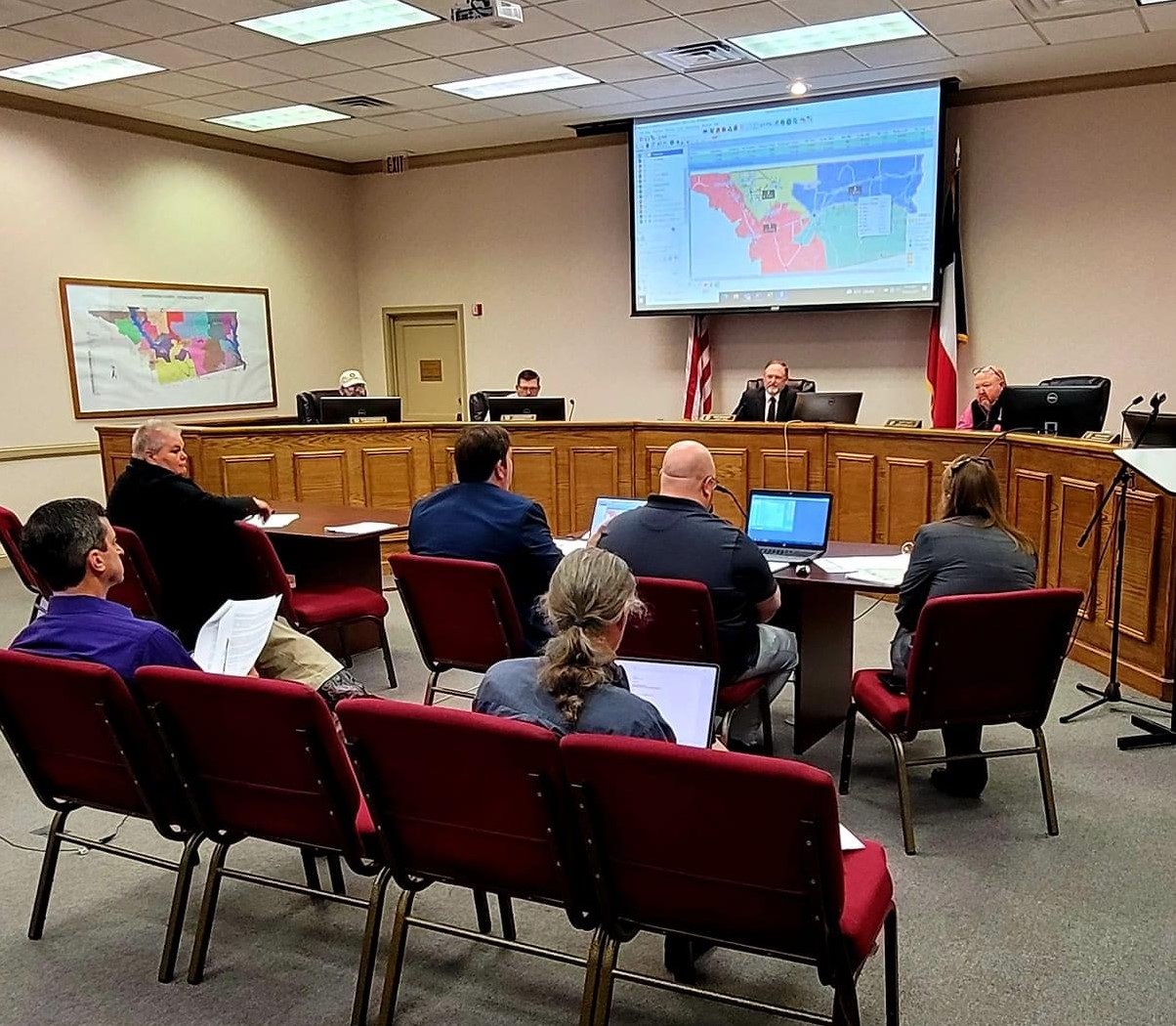
Issues such as community services and infrastructure needs are addressed at meetings of the Commissioners Court.
No legal requirement obligates Commissioners Court meetings to be conducted under a formal parliamentary procedure. According to Attorney General Opinion DM-228: “A Commissioners Court may adopt reasonable rules that are consistent with relevant provisions of law to govern the conduct of its meetings. If the court wishes to use Robert’s Rules of Order or some other formal rules, the method chosen must be consistent with law, adopted by a majority vote of the court, and applied to all court members.” The Opinion refers to Sections 81.005 and 81.006 of the Local Government Code, which address the time, location, and quorum requirements of Commissioners Court meetings.
In addition, the Opinion states: “The court is also subject to the Open Meetings Act, but we have found no statute setting out comprehensive procedures for the conduct of Commissioners Court meetings.”
Many counties have decided that it is in their best interest to formally adopt rules of procedure, conduct, and decorum for meetings of the Commissioners Court. These areas, along with topics such as public participation and the meeting agenda, are addressed in a sample set of rules developed by Allison. These sample rules are updated as needed to reflect legislative changes; the latest sample will be published in the February issue of County Progress.
House Bill 2840 passed by the 86th Texas Legislature amended the law relating to the right of a member of the public to address the governing body of a political subdivision at an open meeting of the body. The law states:
- Members of the public are entitled to address all open meetings, not just public hearings.
- The Commissioners Court may continue to limit the amount of time allotted to the public and may continue to punish disruption of the meeting.
“Rules of procedure and decorum are very important for an efficient, productive Commissioners Court meeting,” Allison stated. “The rules provide a framework for the transaction of business and inform the public on the proper procedure for presenting comments at the meeting.”
Pursue My Continuing Education

The Texas Constitution spells out the education requirements for members of Commissioners Court. What better time than now to set your educational calendar?
Per Government Code Section 74.025, County Judges are required to earn 30 credit hours during their first year of office, and 16 credit hours for each 12-month reporting period following the first year in office. There are now additional requirements for a County Judge who performs magistrate duties.
Per Local Government Code Section 81.0025, County Commissioners must earn 16 hours for each 12-month period in office; eight surplus hours may be carried from one 12-month period to the next.
For additional detailed information on education requirements, please see Key Concept.
The County Judges and Commissioners Association of Texas is committed to providing a variety of educational opportunities, per Article II, Section 4 of the CJCAT Constitution: “This Association shall sponsor and co-sponsor educational conferences, seminars, and other programs for county officials and county employees to study information relative to county affairs and assist those officials in need of Continuing Education credits, as required by law.”
Planning is well underway for the 2026 CJCAT regional and state conferences, with specific details available in our County Calendar.
Go Above and Beyond
Pursue Commissioners Court Advanced Curriculum Certification
Earning your Commissioners Court Advanced Curriculum certification is a worthy resolution that has already been achieved by more than 800 officials.
Commissioners Court Advanced Curriculum (CCAC) is a comprehensive educational program designed specifically for members of the Commissioners Court.
CCAC was adopted by the County Judges and Commissioners Association of Texas in 1992 to provide curriculum for an advanced study in county government. The program is continually updated as foundational information provided in the original program is merged with material necessitated by legislative changes and the new and varied challenges faced by a rapidly growing state.
“CCAC offers County Judges and Commissioners advanced training beyond the state-mandated educational requirements,” explained Hays County Commissioner Debbie Gonzales Ingalsbe, chairman of the CJCAT County Commissioners Education Committee. “The classes help us gain a greater understanding of every elected office and further equip us to provide resources and services.” For more information on CCAC, please see page ?
Offer to Serve My Association

Every Texas county is a member of the County Judges and Commissioners Association of Texas.
The CJCAT is divided into three regional associations with several subgroups within the regional organizations.
- The North & East Texas County Judges and Commissioners Association is comprised of 74 counties.
- The South Texas County Judges and Commissioners Association includes 62 counties. (Chambers County is a member of both the North & East and South associations.)
- The West Texas County Judges and Commissioners Association serves 119 counties.
- The Deep East Texas County Commissioners and County Judges Association is a subgroup of North & East Texas, made up of 15 counties from Far East Texas.
- On the opposite side of the state, the Far West Texas County Judges and Commissioners Association represents the western-most counties, with a total membership of 36.
- Also a part of the West Texas group, the Panhandle County Judges and Commissioners Association includes 34 member counties.
Each Association, from the State Association down to the subregions, has elected officers. Association committees conduct important business, including the development and presentation of resolutions, discussion of conference sites, nomination of future officers, and selection of scholarship recipients.
“Active involvement in our state and regional associations strengthens local leadership,” said CJCAT President Kirk Frye, Parmer County Commissioner. “By showing up we not only guide the future of our counties, but we also build the relationships that make us more effective at home.”
The County Progress Magazine staff attends your Association conferences. We look forward to seeing you throughout 2026! If you have any questions about your Association, upcoming conferences, or resources for county officials, please contact Editor Julie Anderson at julie@countyprogress.com.