

Thank You For Your Service
County Progress would like to thank all of our Veterans for their service. As we observe Veterans Day on Nov. 11, we are honored to feature Brazos County Commissioner Bentley Nettles, Brigadier General (BVT)(R). Nettles deployed to multiple combat theaters around the world, including Bosnia, Afghanistan, and Iraq. His distinguished service earned him numerous military decorations, including the Legion of Merit, the Bronze Star Medal with two oak leaf clusters, and the Purple Heart Medal.
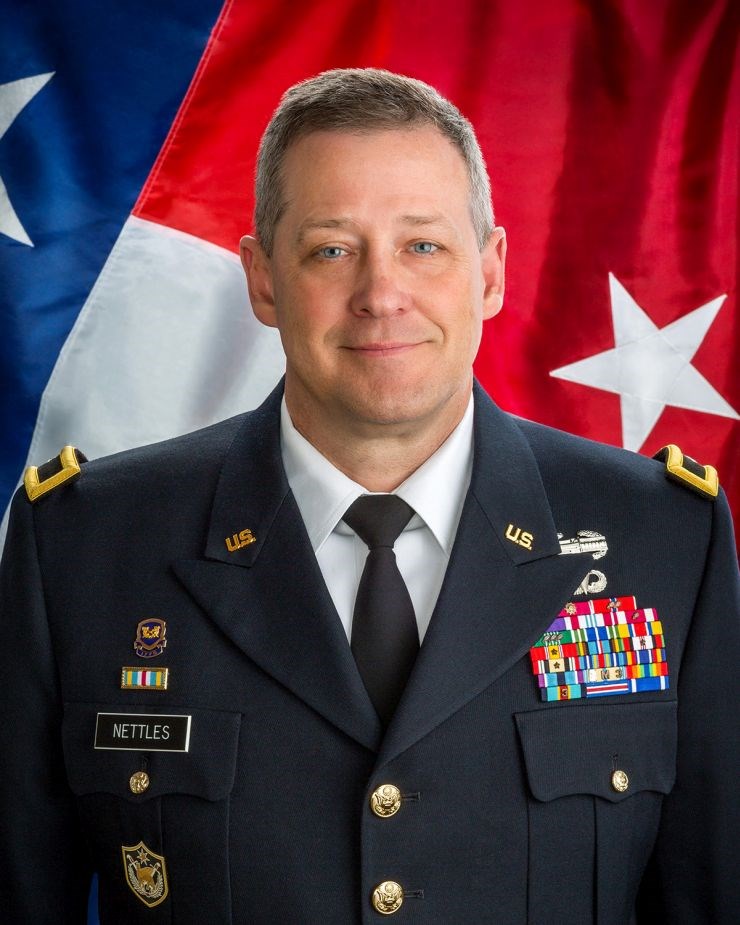
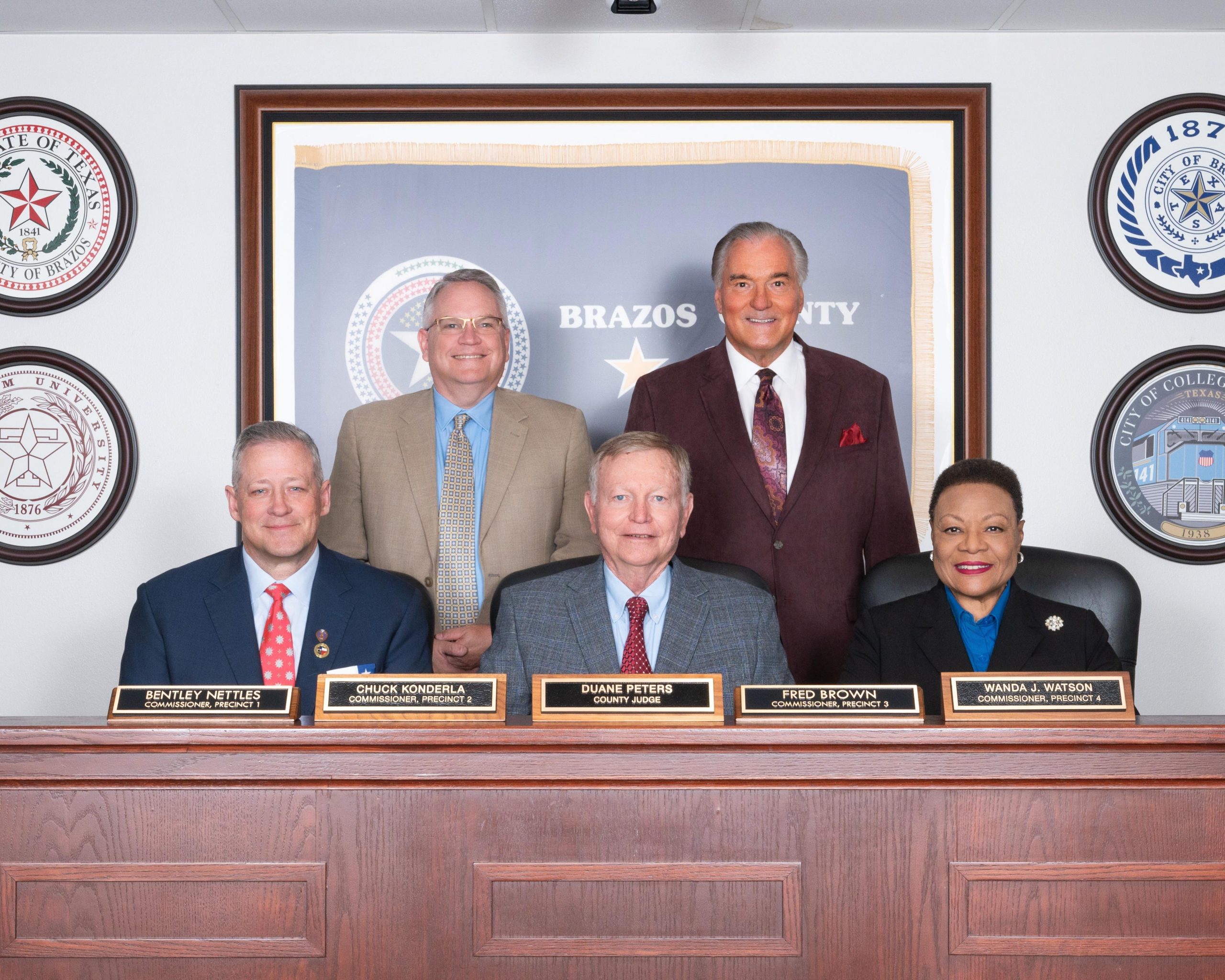
Nettles took office as Brazos County Commissioner on Jan. 1, 2025. Once again, we would like to thank Commissioner Nettles for his service and for taking the time to share his story:
My military service began at Texas A&M University, where I was commissioned as a second lieutenant in the U.S. Army. At the time, I could not have fully understood where that commission would eventually take me or how profoundly military service would shape the rest of my life. I began my career as a young officer, learning the fundamentals of leadership, responsibility, and service. Over the years, I progressed through the Army and ultimately the Texas Army National Guard, eventually attaining the rank of Brigadier General. The rank was never what mattered most to me. What mattered was the responsibility that came with it, and, more importantly, the opportunity to serve alongside extraordinary men and women.

One of the most significant chapters of my military career began when I deployed to Afghanistan in 2003-04 as an Information Operations Team Leader with the 10th Mountain Division and later the XVIII Airborne Corps. Information Operations was a relatively specialized discipline, but its importance became increasingly clear as the nature of warfare changed. Military operations were no longer simply about controlling terrain or defeating an enemy’s conventional forces. They were also about influencing perceptions, countering misinformation and propaganda, understanding the information environment, and helping commanders achieve objectives through the effective use of information.
Leading an Information Operations team in Afghanistan placed me in the middle of that challenge. We were operating in a complex environment where military actions, local perceptions, cultural understanding, intelligence, communications, and strategic objectives were all interconnected. Success depended upon understanding not only what was happening on the ground, but also how those events were being perceived by the Afghan population, our coalition partners, and the adversary. That deployment fundamentally expanded my understanding of military leadership and modern warfare.
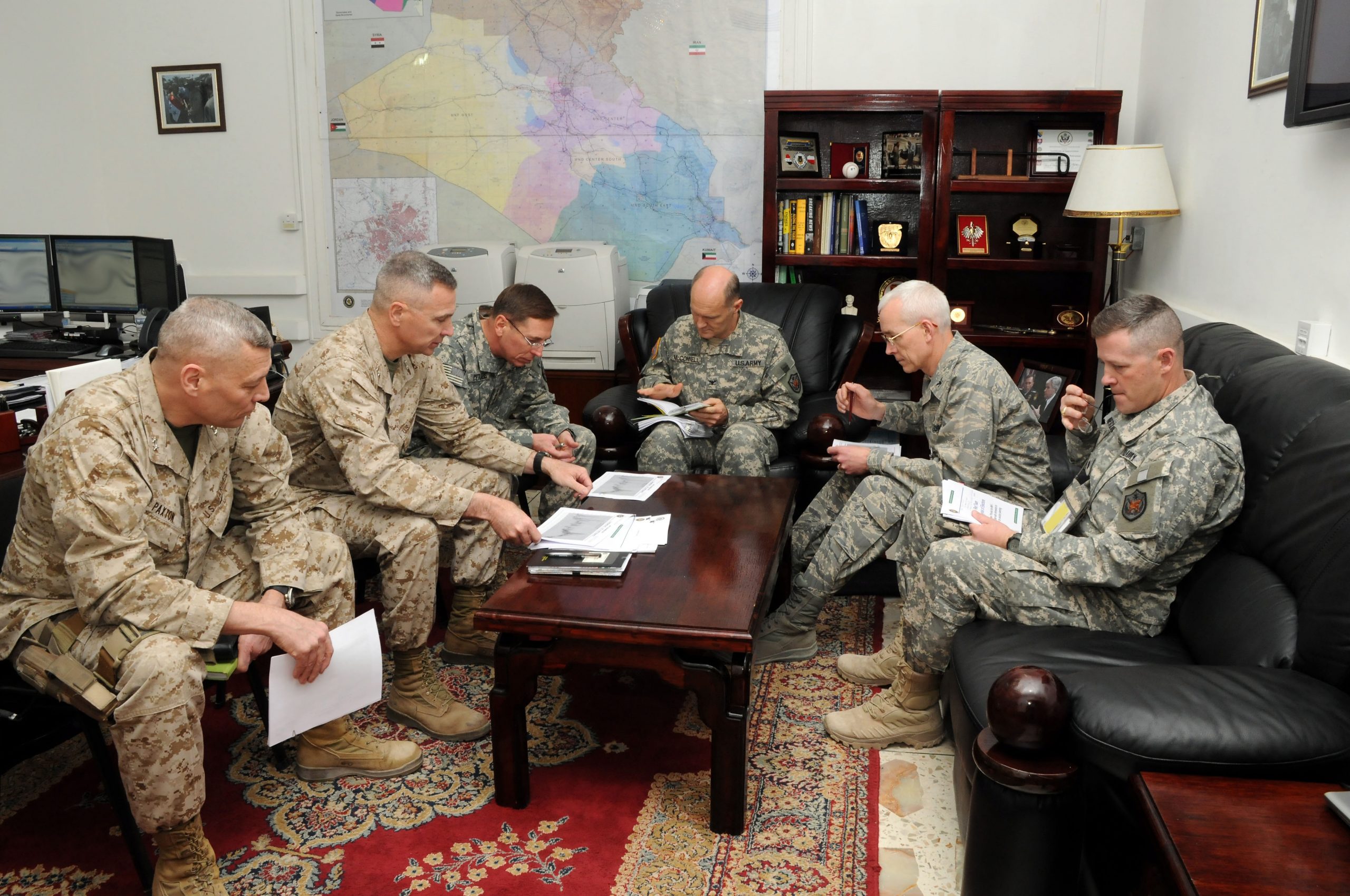
When I returned from Afghanistan, I deployed again, this time to Iraq in 2004-05 as an Information Operations Team Leader with Multinational Corps-Iraq. The experience in Iraq was different, but the fundamental challenge remained: Commanders had to understand that military operations occurred simultaneously on the physical battlefield and in the information environment. Leading an Information Operations team at the corps level meant working with commanders and staff officers on issues that extended well beyond any single unit or operation. We had to understand the operational environment, anticipate how actions would be perceived, identify opportunities to communicate effectively, and help commanders make decisions with an appreciation for the information and consequences of their actions. Those experiences gave me a perspective on military operations that would influence the rest of my career.
In 2007-08, I returned to Iraq in another particularly significant assignment. I served as Deputy Team Leader for a Red Team embedded first within Multinational Corps-Iraq and then Multinational Force-Iraq, including service on General David Petraeus’s staff. The Red Team’s mission was fundamentally different from simply supporting an existing plan. Our responsibility was to challenge assumptions, examine problems from different perspectives, and ask the questions that others might not want to ask.
That assignment reinforced one of the most important lessons I learned about leadership: Good leaders need people around them who are willing to tell them what they need to hear, not simply what they want to hear.
Serving on a Red Team required intellectual honesty. We had to examine plans critically, identify weaknesses, consider how an adversary might respond, and provide senior leaders with an alternative perspective.
Being embedded within Multinational Corps-Iraq and later Multinational Force–Iraq gave me an opportunity to see military operations from an exceptionally broad perspective. Serving on General Petraeus’s staff exposed me to senior-level decision-making during one of the most consequential periods of the Iraq War. Those deployments were among the most formative experiences of my military career.
Afghanistan and Iraq taught me that leadership in combat is rarely about having all the answers. It is about assembling the right people, asking the right questions, understanding the environment, and having the courage to make decisions when the information is incomplete. They also reinforced the importance of dissenting viewpoints.
As a leader, I learned that one of the greatest dangers is surrounding yourself with people who are afraid to challenge you. The Red Team experience demonstrated the value of deliberately creating an environment where assumptions could be questioned and alternative courses of action could be examined before decisions were made.
My military career eventually took me from those operational assignments into increasingly senior leadership and legal responsibilities. After earning my law degree from South Texas College of Law and later a Master of Science in Security Studies from the Naval Postgraduate School, I had the opportunity to work at the intersection of law, national security, and military operations.
I became the first Texas National Guard JAG officer selected as a National Security Legal Fellow at Tufts University’s Fletcher School of Law and Diplomacy. That experience broadened my understanding of the complicated legal, diplomatic, and security issues confronting our military and our nation.
Prior to my retirement, I served as General Counsel for the Army Element of Joint Force Headquarters. By that point, I had experienced military service from many different perspectives – at the tactical level, at the operational level, in combat, as a legal adviser, and as a senior leader. Each experience reinforced the same fundamental lesson: Leadership is about responsibility. The people entrusted to you deserve leaders who are prepared, who listen, who are willing to make difficult decisions, and who accept responsibility for the consequences.

My military service was not without sacrifice. Neither was it without cost. The deployments, time away from family, demands of command, and experiences of combat leave an impression that stays with you long after you leave the battlefield.
I was honored to receive numerous military decorations for my service, including the Legion of Merit, the Bronze Star Medal with two oak leaf clusters, and the Purple Heart. Those awards are meaningful to me, but I have always believed that the greatest recognition of military service is not a medal; it is the knowledge that you stood with your fellow soldiers when they needed you.
After decades of service, I ultimately retired from the military. But I never viewed retirement as the end of my obligation to serve. When I separated from active duty in 2015, I opened a law practice in Bryan and represented veterans in administrative proceedings before the Department of Veterans Affairs.
Military service taught me that leadership is a privilege, not a possession. It taught me to take care of the people entrusted to me, to accept responsibility when things go wrong, to give credit to others when things go right, and to understand that the mission is always bigger than the individual. Most importantly, the military taught me that service does not end when you take off the uniform.
The uniform may eventually hang in the closet, but the values you learned while wearing it remain with you. Duty. Honor. Courage. Sacrifice. Commitment. Those are not simply words associated with a military career; they became part of who I am.
I remain proud of my service to our nation, proud of the soldiers with whom I served, and especially grateful to the families who carried the burden at home while we were away.
Looking back, I consider my military career one of the greatest privileges of my life. I was given the opportunity to serve. I was given the opportunity to lead. And I was given the opportunity to stand beside Americans who were willing to risk everything for something greater than themselves. For that, I will always be grateful.
AWARDS AND DECORATIONS
- Legion of Merit
- Bronze Star with 2 Oak Leaf Clusters
- Purple Heart
- Defense Meritorious Service Medal
- Meritorious Service Medal with Oak Leaf Cluster
- Army Commendation Medal with 3 Oak Leaf Clusters
- Army Achievement Medal
- Army Reserve Component Achievement Medal (with 1 Silver Oak Leaf Cluster and 1 Bronze Oak Leaf Cluster)
- National Defense Service Medal with Bronze Service Star
- Armed Forces Expeditionary Medal
- Afghanistan Campaign Medal with Campaign Star
- Iraqi Campaign Medal with Campaign Star
- Global War on Terrorism Expeditionary Medal
- Global War on Terrorism Service Medal
- Humanitarian Service Medal
- Armed Forces Reserve Medal with Silver Hour glass, M-Device and Numeral 2
- Army Service Ribbon
- Overseas service Ribbons with a Numeral 3
- Army Reserve Component Overseas Training Ribbon
- NATO Medal
- Parachutist Badge
- Combat Action Badge
- Combat Infantry Badge
- Joint Unit Meritorious Award